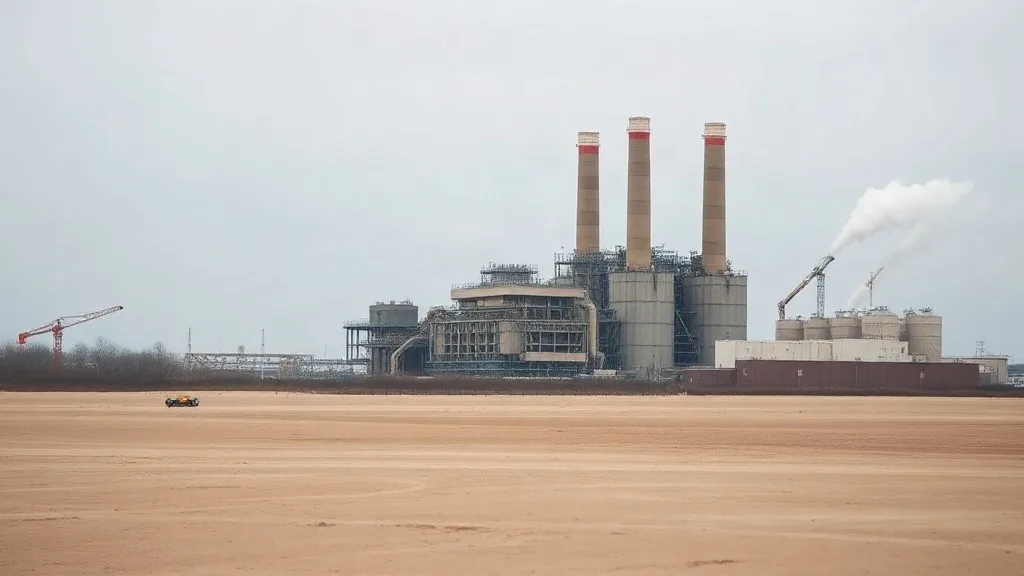
The Scottish government has given the go-ahead for a gas-fired power station at Peterhead, according to Daily Business. The 900 megawatt facility will be built as a joint venture between SSE of the UK and Equinor of Norway, the pair also involved in the Jackdaw gas field.
Key points
- Approval — Scottish ministers have cleared the Peterhead gas plant.
- Partners — SSE and Equinor will build it together.
- Technology — carbon capture is meant to strip CO2 from emissions.
- Jobs — about 1,000 roles during construction, plus dozens long term.
Developers say the plant will use carbon capture technology to take CO2 out of its emissions. Construction could support around 1,000 jobs, with dozens of permanent roles once the station is running.
Finlay McCutcheon, managing director of SSE Thermal, called the decision an important milestone. In his words, the project has the potential to supply the flexible, low-carbon electricity needed for a renewables-led system, while creating and sustaining good jobs in the north-east of Scotland.
Opposition has been vocal. Friends of the Earth Scotland argue the approval leaves Scotland dependent on fossil fuels. Maggie Chapman, a Green MSP for North East Scotland, said the existing Peterhead station has been generating electricity for four decades and described it as Scotland's largest source of climate pollution.
What it means in practice
The decision mostly matters for Scotland's energy supply and for the north-east economy. For most households, nothing changes on the next bill, and the new plant will take years to build before it produces any power.
- Local jobs — construction work and long-term operating roles are expected in the Peterhead area.
- Energy mix — backers say the plant will provide flexible power alongside renewables, though the climate impact will remain contested.
- Watch the planning details — how the carbon capture element performs will be the measure of whether the low-carbon claims hold up.